It's been a few years since we backpacked the Lost Coast Trail, but it's honestly one of my favorite trips and one I'll never forget. This isn't a full itinerary. I just want to share my experience in case some of you are on the fence about this trail. Do it.
The Plan
We hiked north to south, which is the standard direction (the prevailing wind is at your back). The plan was to drive up from Southern California, camp the first night in Shelter Cove, take a pre-booked shuttle 25 miles north to the trailhead the next morning, and then hike back to our car over four days.
I left most of the logistics to a buddy of mine, which was convenient for me prior to the trip but also the reason we had a couple of close calls. More on those later. I would say the most important non-trail logistics you need to iron down are which direction you're doing the trail, how you're getting back to your car, where you're posting up the night before, and where the nearest Taco Bell is once you finally make it back to the car (a tradition of ours).
The boring-but-important stuff:
Permit: A King Range Wilderness Permit is required year-round for overnight trips. They're released on Recreation.gov 6 months in advance to the minute and go fast, especially May through September. The fee is $6. One permit covers up to 3 people; bigger groups need additional permit holders (max group size 15).
Shuttle: Most people use Lost Coast Adventure Tours these days (~$95/person, 3-person minimum, books on their website). Bill's Lost Coast Shuttle is the other established option. Whoever you book with needs to be BLM-permitted to legally run shuttles in the King Range. We just used some random guy a buddy found, which worked out, but I'd book a real service if I did it again.
Direction: North to south (Mattole → Black Sands Beach) is standard: wind at your back, shuttle drops you at the start, your car is waiting at the end.
Best season: Shoulder season (April / early May / late October) tends to mean fewer people, more permit availability, and less fog. Summer is peak demand.
Tides: Check tide tables BEFORE you book your permit. Some date ranges are simply impassable.
Don't Camp on the Beach at Shelter Cove
We rolled into Shelter Cove after about 8 hours of driving, and it was already dark. The original plan was to camp on the beach. My buddy had read online that it was free.
We hiked down and started walking out onto the dark sand. All I remember is the massive, crushing sound of waves that felt way too close to be safe. It was pitch black, so I couldn't actually see how big the surf was or how close it was breaking. You could feel each one before you heard it, this dull thump that didn't match how far away the water sounded. Pretty quickly we agreed it was time to get the hell out of there and crammed four of us into the car for the night.
That turned out to be the right call. People have died on that beach after being swept away by sneaker waves. I've been back to Shelter Cove a few times since, and in daylight, you can see the break there gets enormous. Don't sleep on that beach. The locals will tell you the same thing.
Timing the Tides
After an uncomfortable night of car-sleep, we caught our shuttle to the trailhead and split the trip into four days.
The biggest thing to plan around: there are three tidal zones that are impassable at high tide. You have to time these right. I can't stress this enough: get a tide chart, plan your daily mileage around the windows, and don't try to push through if you've miscalculated. Without a chart, it's really hard to tell if the water is coming or going.
The three zones:
Punta Gorda Lighthouse: a single pinch point, recommended tide threshold 5 feet
Sea Lion Gulch to Randall Creek (~4 miles): recommended tide threshold 2.5 feet
Big Flat to Gitchell Creek (~4.5 miles): recommended tide threshold 3 feet
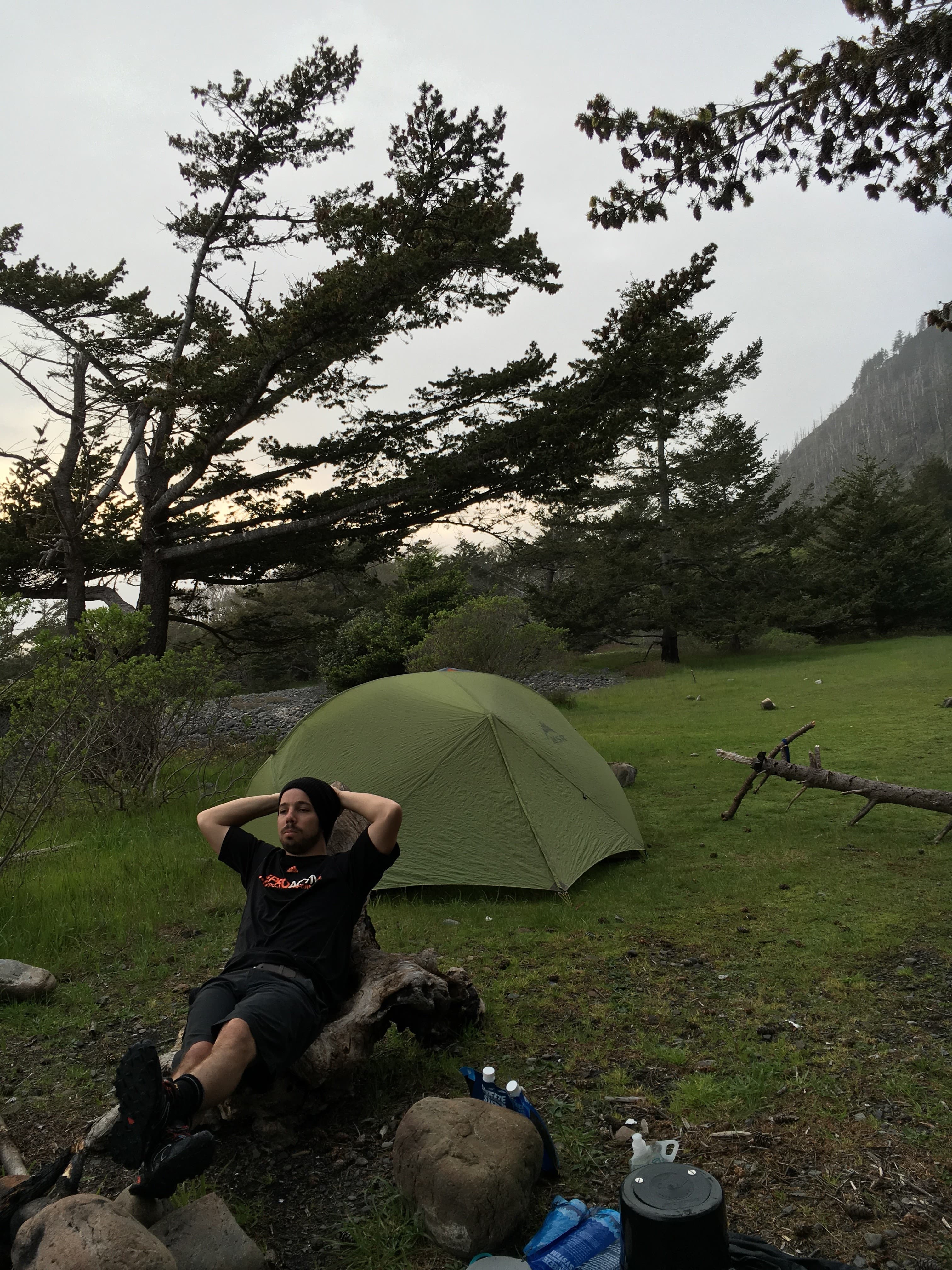
The way the tidal zones are spaced out makes the middle of a 4-day trip kind of awkward. The two long tidal zones bookend an 8-mile stretch between Randall Creek and Big Flat with no tide constraints, so depending on how you split it, you end up with one short day in the middle. For us it was a leisurely afternoon at Spanish Flat with time to soak it all in, which honestly turned out to be a highlight. This trail is worth a leisurely pace anyway.
I remember stepping into that first long tidal zone. The sky was dark, the water was still lapping up against the cliffside, and I recall thinking, "I really hope we read those charts right." As we entered, it was just clearing up enough to let us pass. Our ankles were still getting wet. The cliff on our left was wet way up above our heads, which told you everything you needed to know about where the water sat at high tide. I can't remember if we talked much through that zone. I just remember we kept moving until we cleared it. If you're in there at the wrong time, it's no joke. There's no way out, just rough seas and a sheer cliff. In my head, I remember thinking, if I get swept out, I just have to get my backpack off as fast as I can. I kept running through it, the chest strap, the hip belt, where my hands would need to go. It sounds a bit dramatic reading it back and I have no idea if it would've actually helped, but it definitely crossed my mind. Luckily, we planned that part of the trip right, and it never came to that. But honestly, for a stretch in there, I wasn't totally sure.
The Hike Itself
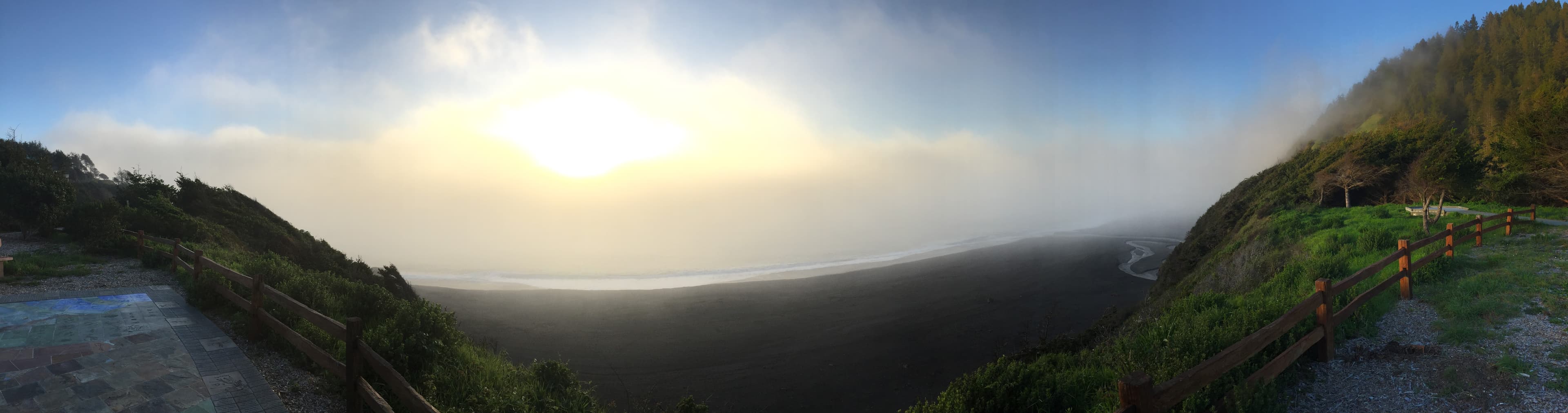
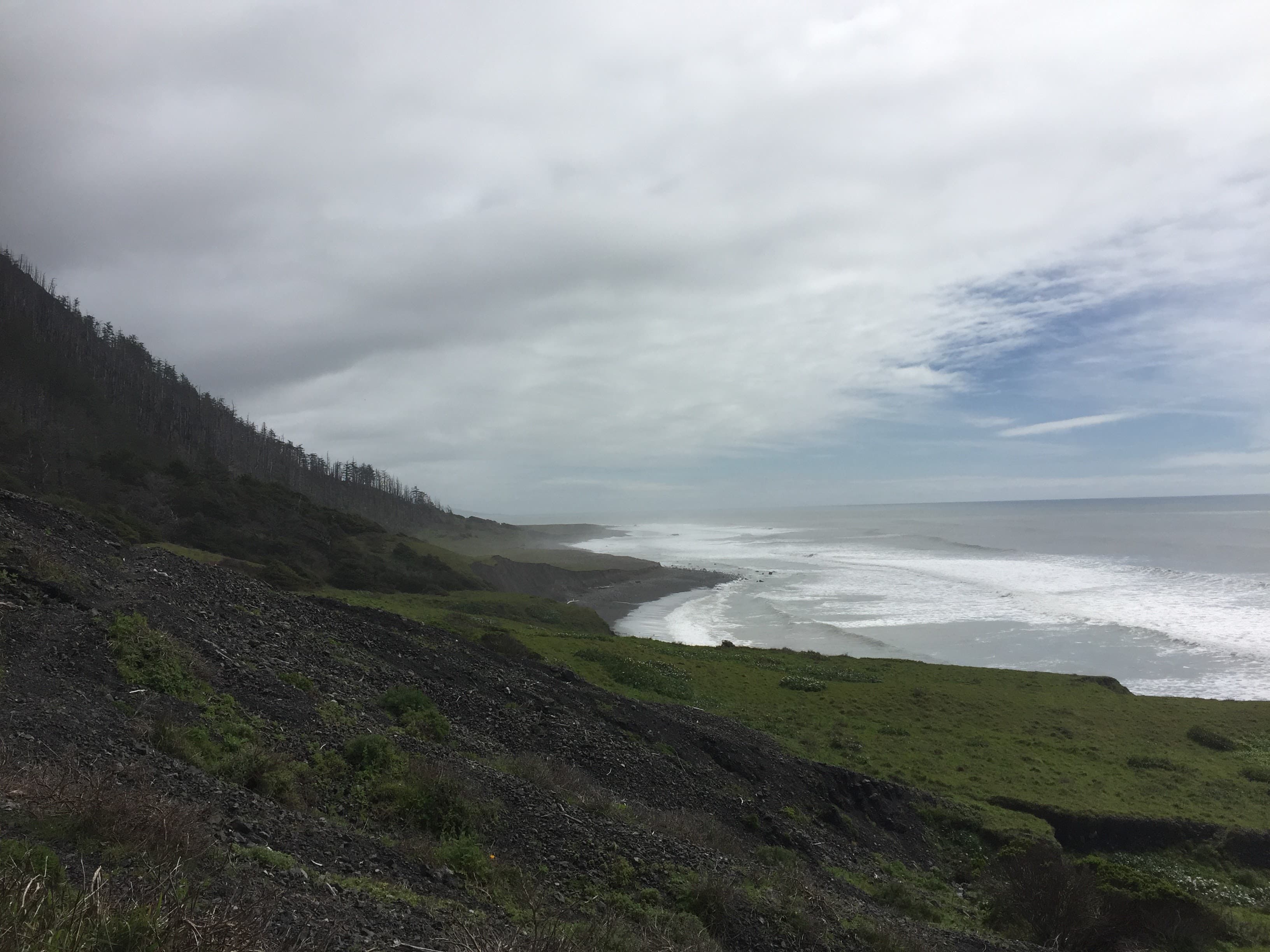
The weather on our trip was overcast and rainy, and honestly, that's what I remember most. How ominous the ocean and the sky felt, paired with this profound beauty. It felt like walking through a video game render that shouldn't exist in real life. The dark ocean, the electric green of the hills and forest, the black sand. The contrast was unreal.
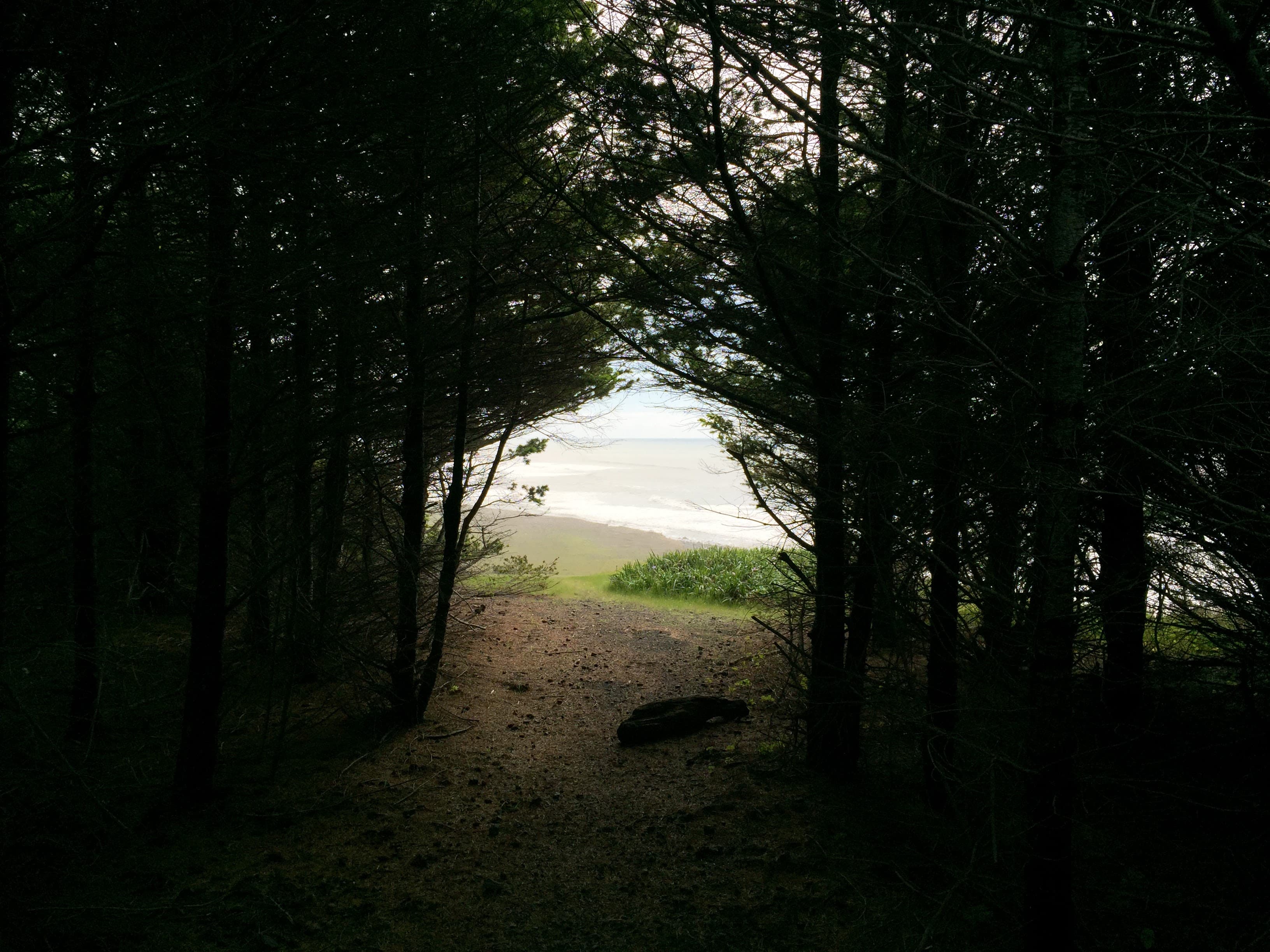
The trail is beautiful, and there's so much to see. Dim, tangled groves of thin coastal pines open up onto misty clearings of electric green grass, like little portals leading you out of the woods and back to the coast.
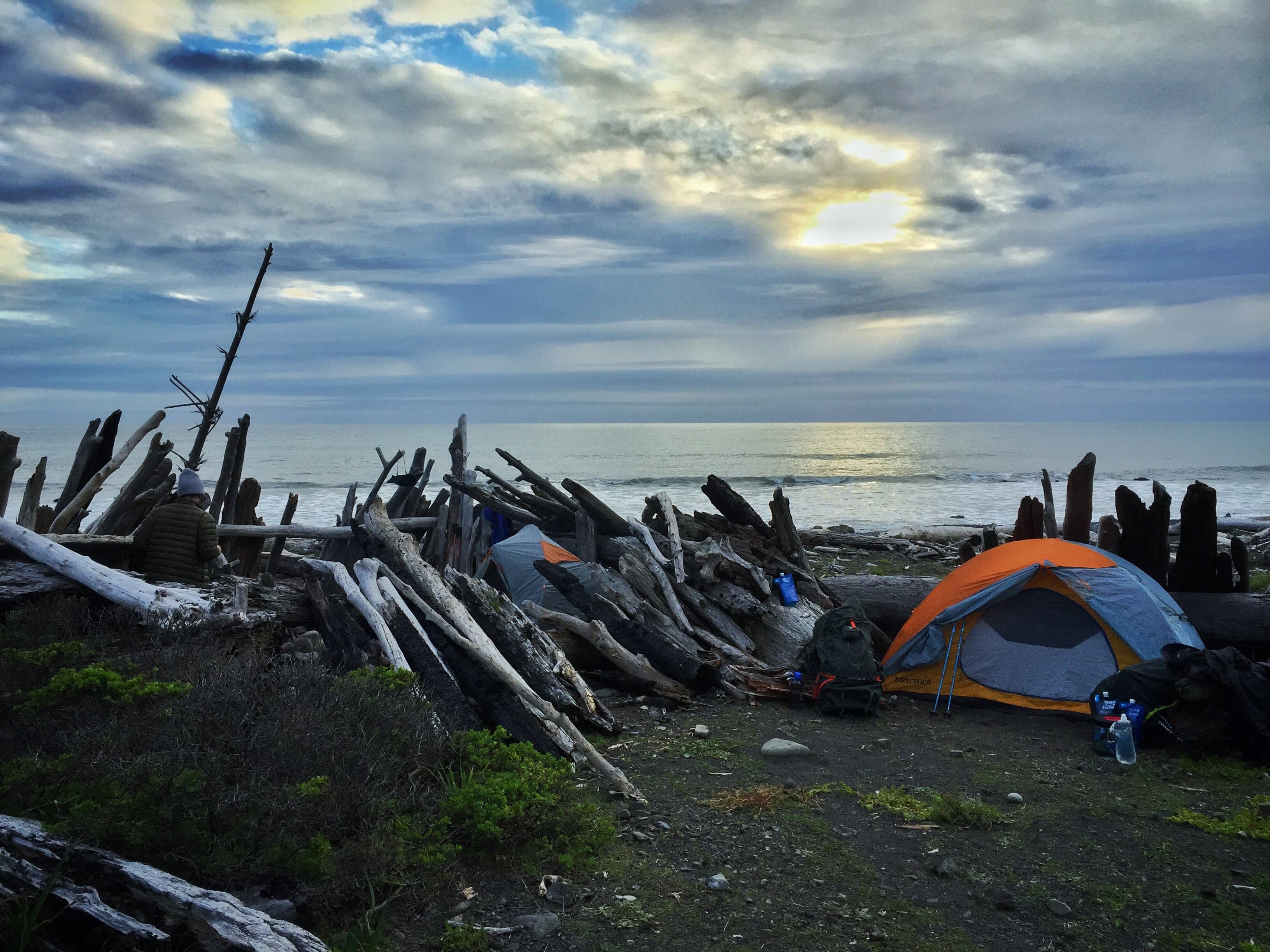
We made a campsite among the driftwood, which really did it for my inner fort-building child. There are serious river crossings and open beachside meadows. It's something else.
I'll never forget waking up at the driftwood camp. I crawled out of the tent stiff and cold, and the whole site looked like the bones of a shipwreck. Bleached logs leaning against each other in every direction, a fortress some other group had built up over years of trips. The tide had pulled back overnight, and the surf was quieter than it had been when we fell asleep. One of my buddies was already up, sitting on a driftwood log with a beanie pulled down over his ears, just staring out at the water with a cup of something hot. Nobody said anything for a while. It's one of those mornings that doesn't really happen in regular life. No notifications, no commute, no reason to be anywhere else. Just gray sky, gray ocean, and the slow process of putting on cold socks.
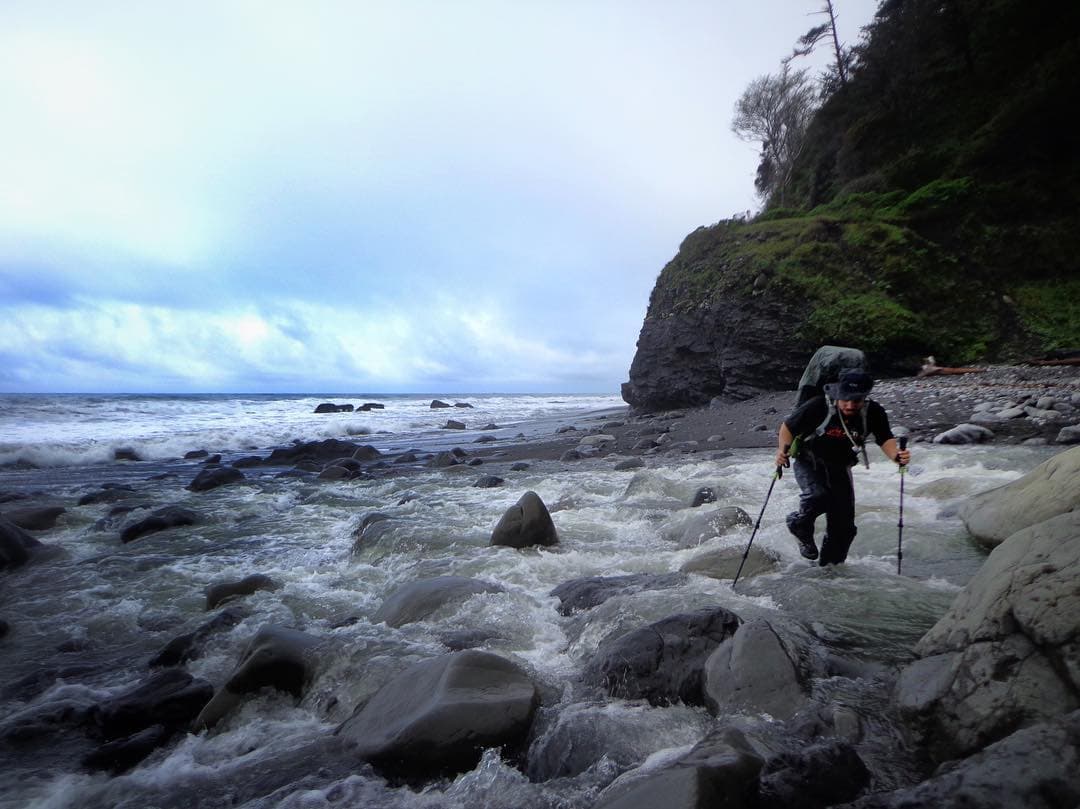
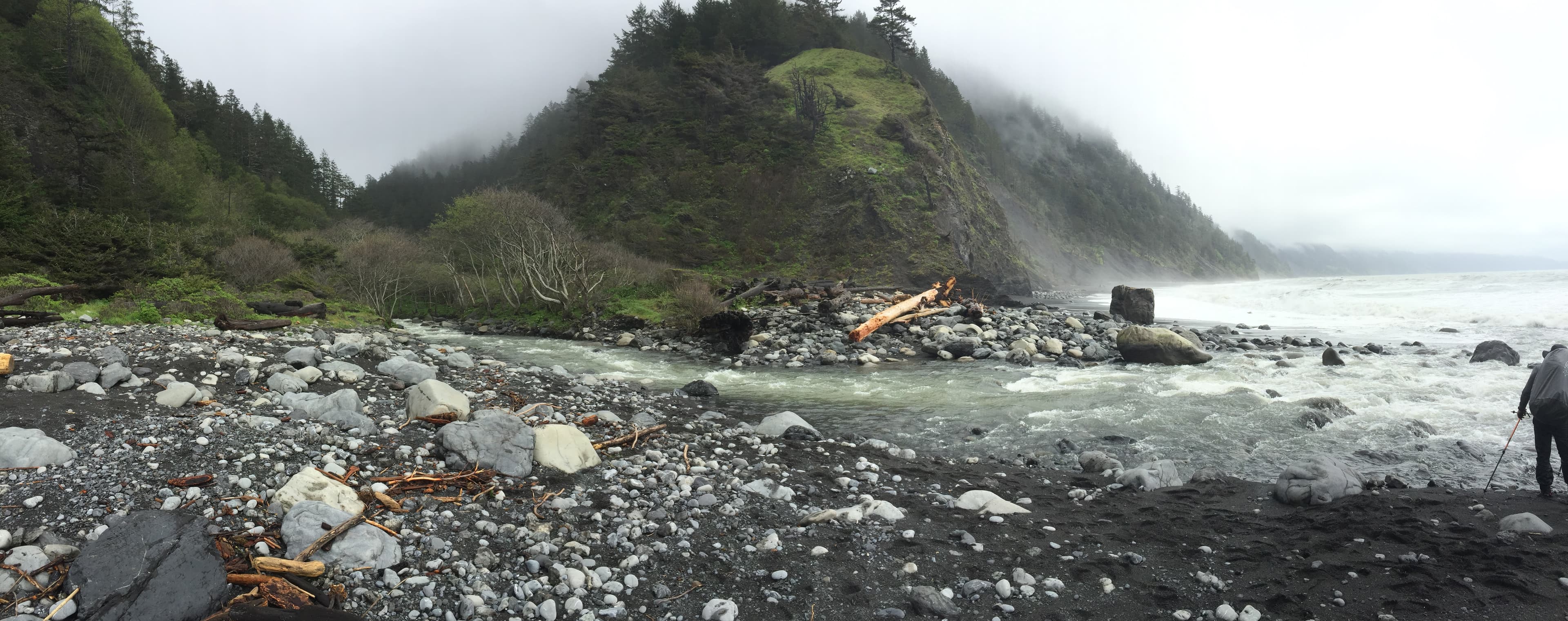
I don't remember exactly how many river crossings there were. It was raining most of the time, which probably added a few that aren't normally there. My buddy caught a shot of me crossing one of the bigger outlets, where the river meets the ocean in a stretch of churning whitewater. It looked sketchier than it was, but the rocks were slick, and the current had real push to it. Worst case, I'd have ended up soaked with a bruised ego, but for a few seconds out there, it definitely had my full attention.
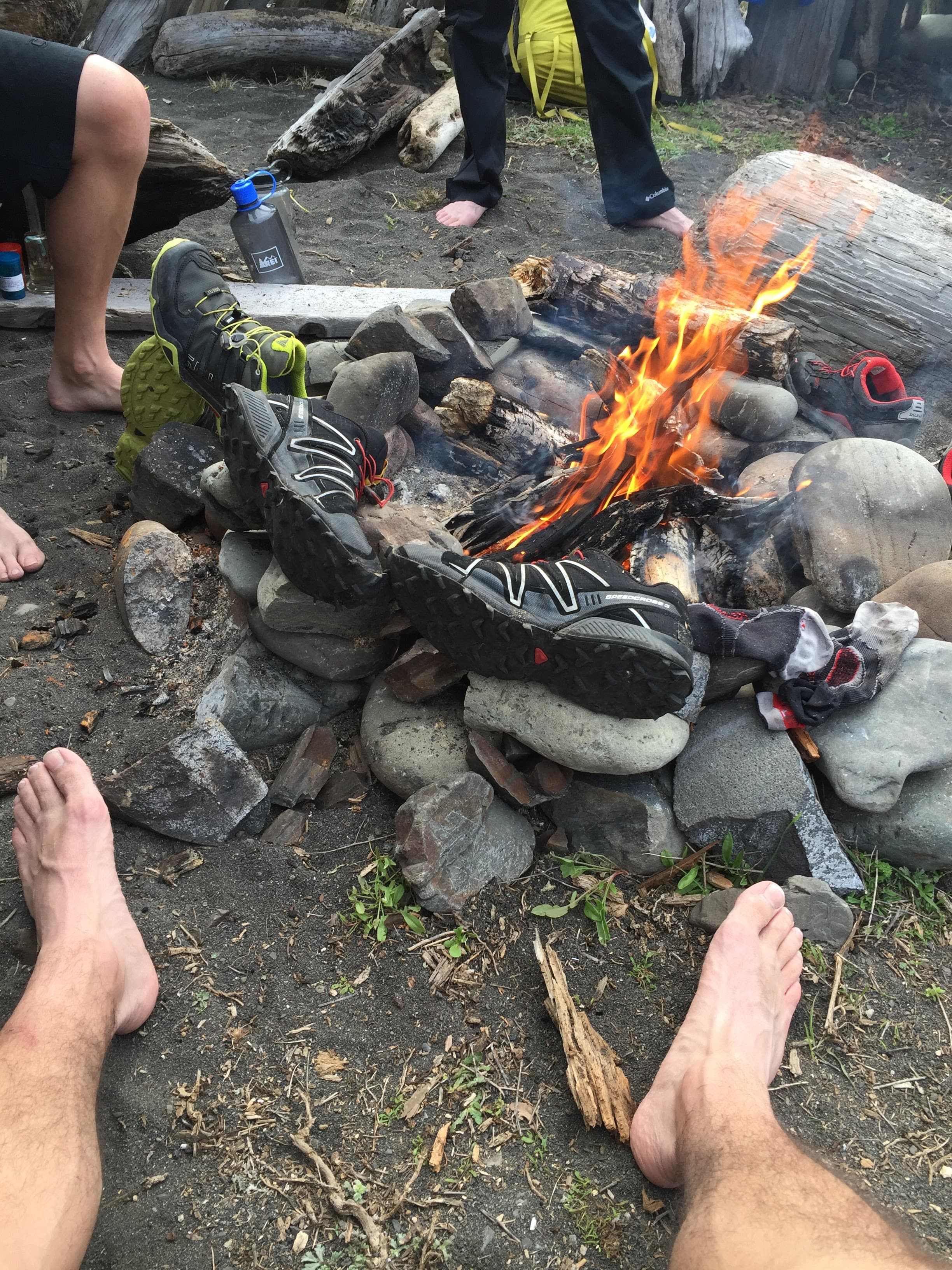
One more cautionary tale: watch your gear around the fire. Right after this photo was taken, two pairs of my buddies' socks caught fire trying to dry out and burned right through.
Recommendations
A few things I'd pass along:
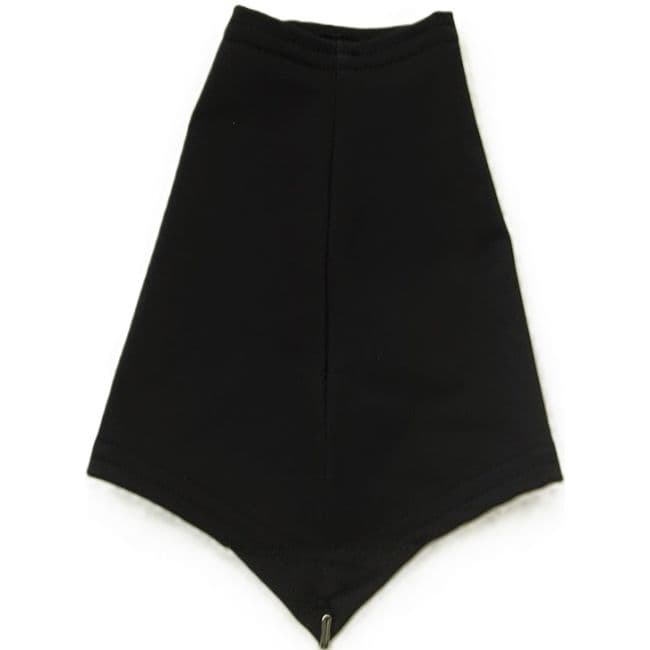
Wear gaiters. You do not want sand in your shoes. I wore , and they were great.
Don't wear boots. You can, but I wouldn't. Wear shoes you don't mind getting wet, because your feet will be wet most of the time. I'll write a follow-up post on footwear specifically.
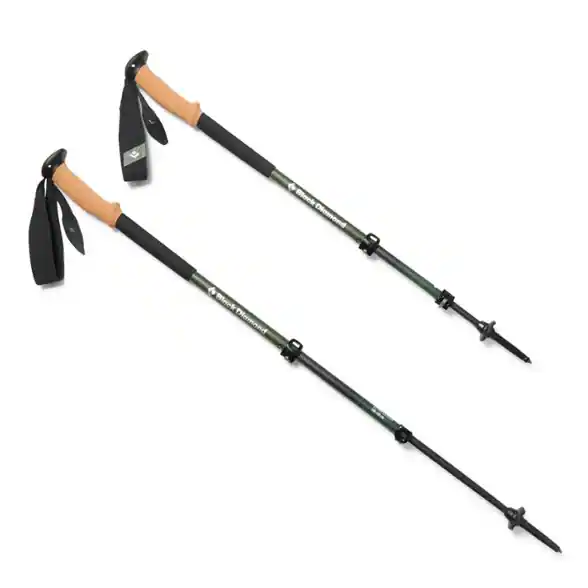
Expect lopsided fatigue. Walking on sand with a constant tilt toward the ocean works one side of your body harder than the other. It's a weird feeling, but you get used to it. Trekking poles help. Back when I did this trip I used a basic pair of REI ones. I've upgraded since to a pair of that I really like.
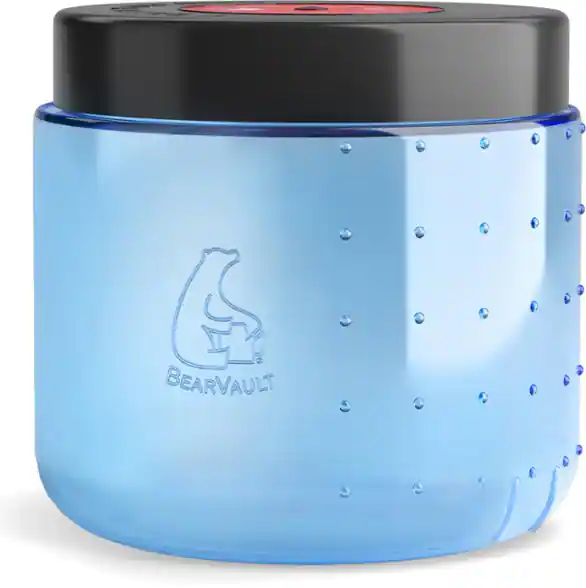
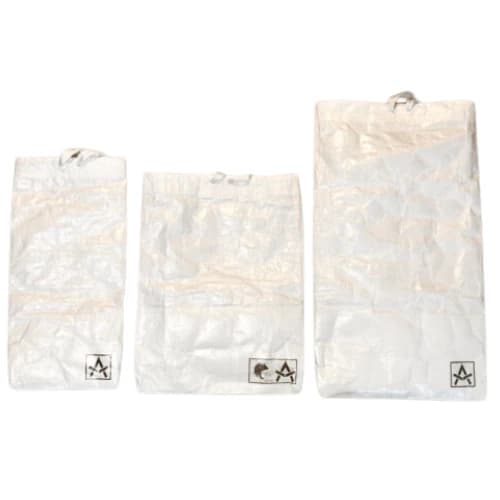
Bring a bear canister. It might seem odd needing one on a beach hike, but it's required, and only hard-sided containers are allowed. If it were up to me I'd use my , but it's not on the approved list. So instead I carry the . Good size for one person over four days. There are bears.
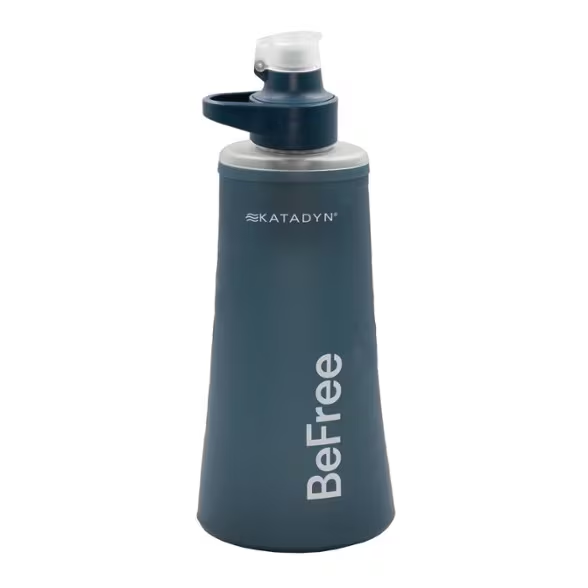
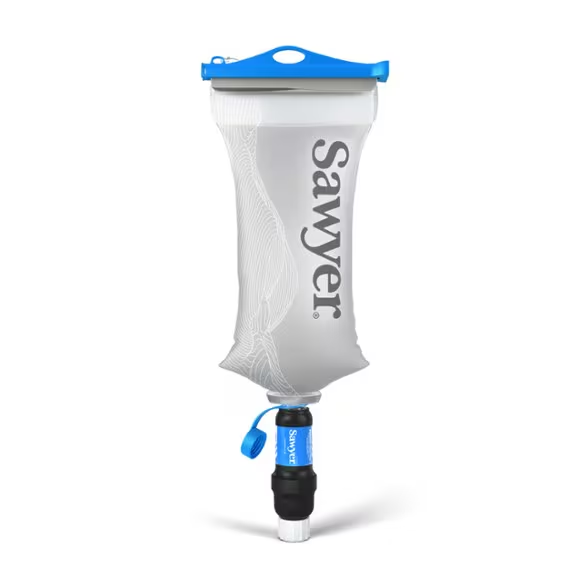
Go light on packed water. Named creeks flow year-round and you'll cross fresh water every mile or two. Cooskie, Randall, Spanish, Kinsey, Big Flat, Shipman, Buck, Gitchell. Carry a liter at a time and refill as you go. A squeeze filter (, ) is all you need. Cattle and sheep graze the upland watersheds, so don't skip filtering. Filter a bit upstream from where the creek meets the surf to avoid brackish mix, and at the bigger outlets like Cooskie or Big Flat, the smaller side creeks generally taste better. After heavy rain, creeks can swell fast; BLM's rule is don't cross water above knee height.
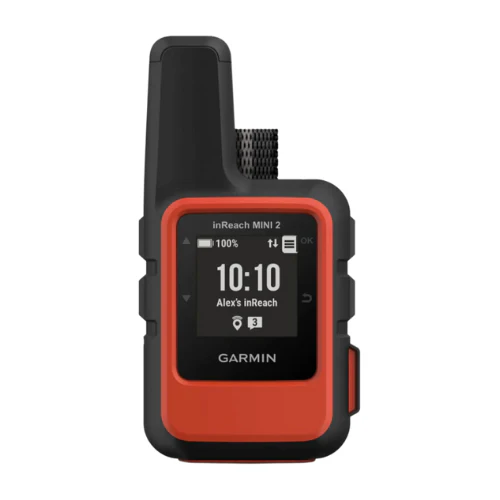
Bring a satellite communicator. I didn't have one then, but there's no way I'd do this trip, or any trip for that matter, without one. I use the .
Final Thoughts
You won't regret this trail. It's one of those trips where the discomfort and the beauty are tangled together so tightly that you can't separate them. That's what makes it worth doing.